Public debate about climate change has been strongly affected by climate change denial and misinformation, which originated in the United States and has since spread to other countries, particularly Canada and Australia. The actors behind climate change denial form a well-funded and relatively coordinated coalition of fossil fuel companies, industry groups, conservative think tanks, and contrarian scientists. Like the tobacco industry, the main strategy of these groups has been to manufacture doubt about scientific data and results. Many who deny, dismiss, or hold unwarranted doubt about the scientific consensus on anthropogenic climate change are labelled as "climate change skeptics", which several scientists have noted is a misnomer.
There are different variants of climate denial: some deny that warming takes place at all, some acknowledge warming but attribute it to natural influences, and some minimise the negative impacts of climate change. Manufacturing uncertainty about the science later developed into a manufactured controversy: creating the belief that there is significant uncertainty about climate change within the scientific community in order to delay policy changes. Strategies to promote these ideas include criticism of scientific institutions, and questioning the motives of individual scientists. An echo chamber of climate-denying blogs and media has further fomented misunderstanding of climate change.
Public Awareness and Opinion
Climate change came to international public attention in the late 1980s. Due to media coverage in the early 1990s, people often confused climate change with other environmental issues like ozone depletion. In popular culture, the climate fiction movie The Day After Tomorrow (2004) and the Al Gore documentary An Inconvenient Truth (2006) focused on climate change.
Significant regional, gender, age and political differences exist in both public concern for, and understanding of, climate change. More highly educated people, and in some countries, women and younger people, were more likely to see climate change as a serious threat. Partisan gaps also exist in many countries, and countries with high CO2 emissions tend to be less concerned. Views on causes of climate change vary widely between countries. Concern has increased over time, to the point where in 2021 a majority of citizens in many countries express a high level of worry about climate change, or view it as a global emergency. Higher levels of worry are associated with stronger public support for policies that address climate change.
Climate Movement
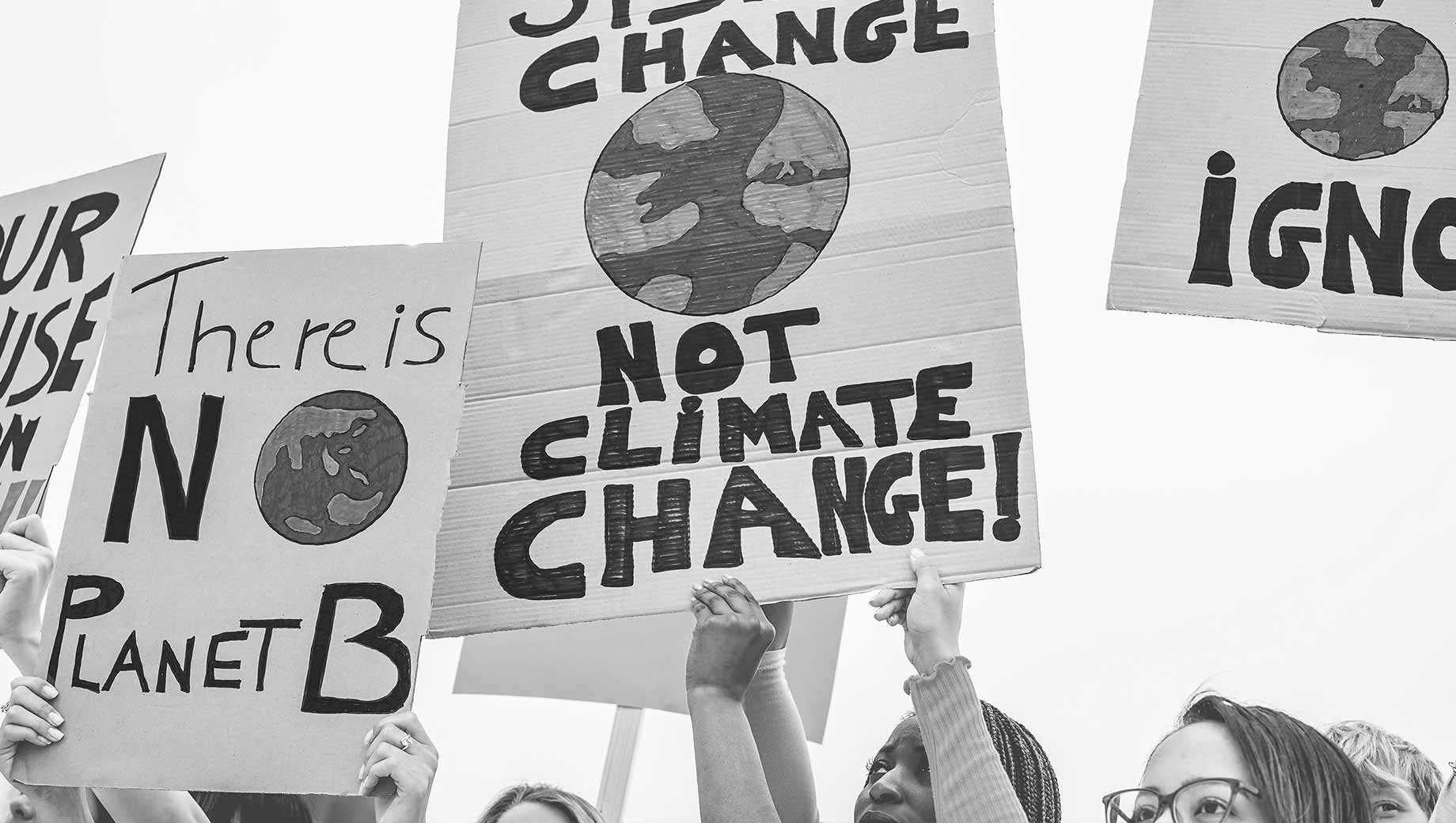
Climate protests demand that political leaders take action to prevent climate change. They can take the form of public demonstrations, fossil fuel divestment, lawsuits and other activities. Prominent demonstrations include the School Strike for Climate. In this initiative, young people across the globe have been protesting since 2018 by skipping school on Fridays, inspired by Swedish teenager Greta Thunberg. Mass civil disobedience actions by groups like Extinction Rebellion have protested by disrupting roads and public transport. Litigation is increasingly used as a tool to strengthen climate action from public institutions and companies. Activists also initiate lawsuits which target governments and demand that they take ambitious action or enforce existing laws on climate change. Lawsuits against fossil-fuel companies generally seek compensation for loss and damage.
 Public debate about climate change has been strongly affected by climate change denial and misinformation, which originated in the United States and has since spread to other countries, particularly Canada and Australia. The actors behind climate change denial form a well-funded and relatively coordinated coalition of fossil fuel companies, industry groups, conservative think tanks, and contrarian scientists. Like the tobacco industry, the main strategy of these groups has been to manufacture doubt about scientific data and results. Many who deny, dismiss, or hold unwarranted doubt about the scientific consensus on anthropogenic climate change are labelled as "climate change skeptics", which several scientists have noted is a misnomer.
There are different variants of climate denial: some deny that warming takes place at all, some acknowledge warming but attribute it to natural influences, and some minimise the negative impacts of climate change. Manufacturing uncertainty about the science later developed into a manufactured controversy: creating the belief that there is significant uncertainty about climate change within the scientific community in order to delay policy changes. Strategies to promote these ideas include criticism of scientific institutions, and questioning the motives of individual scientists. An echo chamber of climate-denying blogs and media has further fomented misunderstanding of climate change.
Public debate about climate change has been strongly affected by climate change denial and misinformation, which originated in the United States and has since spread to other countries, particularly Canada and Australia. The actors behind climate change denial form a well-funded and relatively coordinated coalition of fossil fuel companies, industry groups, conservative think tanks, and contrarian scientists. Like the tobacco industry, the main strategy of these groups has been to manufacture doubt about scientific data and results. Many who deny, dismiss, or hold unwarranted doubt about the scientific consensus on anthropogenic climate change are labelled as "climate change skeptics", which several scientists have noted is a misnomer.
There are different variants of climate denial: some deny that warming takes place at all, some acknowledge warming but attribute it to natural influences, and some minimise the negative impacts of climate change. Manufacturing uncertainty about the science later developed into a manufactured controversy: creating the belief that there is significant uncertainty about climate change within the scientific community in order to delay policy changes. Strategies to promote these ideas include criticism of scientific institutions, and questioning the motives of individual scientists. An echo chamber of climate-denying blogs and media has further fomented misunderstanding of climate change.
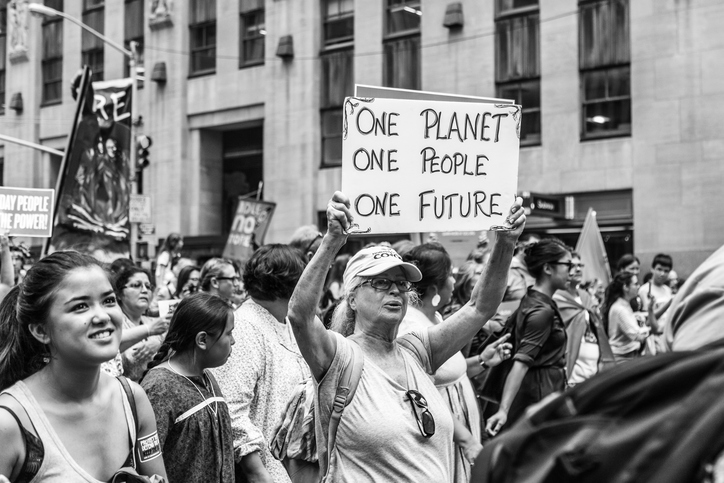 Climate protests demand that political leaders take action to prevent climate change. They can take the form of public demonstrations, fossil fuel divestment, lawsuits and other activities. Prominent demonstrations include the School Strike for Climate. In this initiative, young people across the globe have been protesting since 2018 by skipping school on Fridays, inspired by Swedish teenager Greta Thunberg. Mass civil disobedience actions by groups like Extinction Rebellion have protested by disrupting roads and public transport. Litigation is increasingly used as a tool to strengthen climate action from public institutions and companies. Activists also initiate lawsuits which target governments and demand that they take ambitious action or enforce existing laws on climate change. Lawsuits against fossil-fuel companies generally seek compensation for loss and damage.